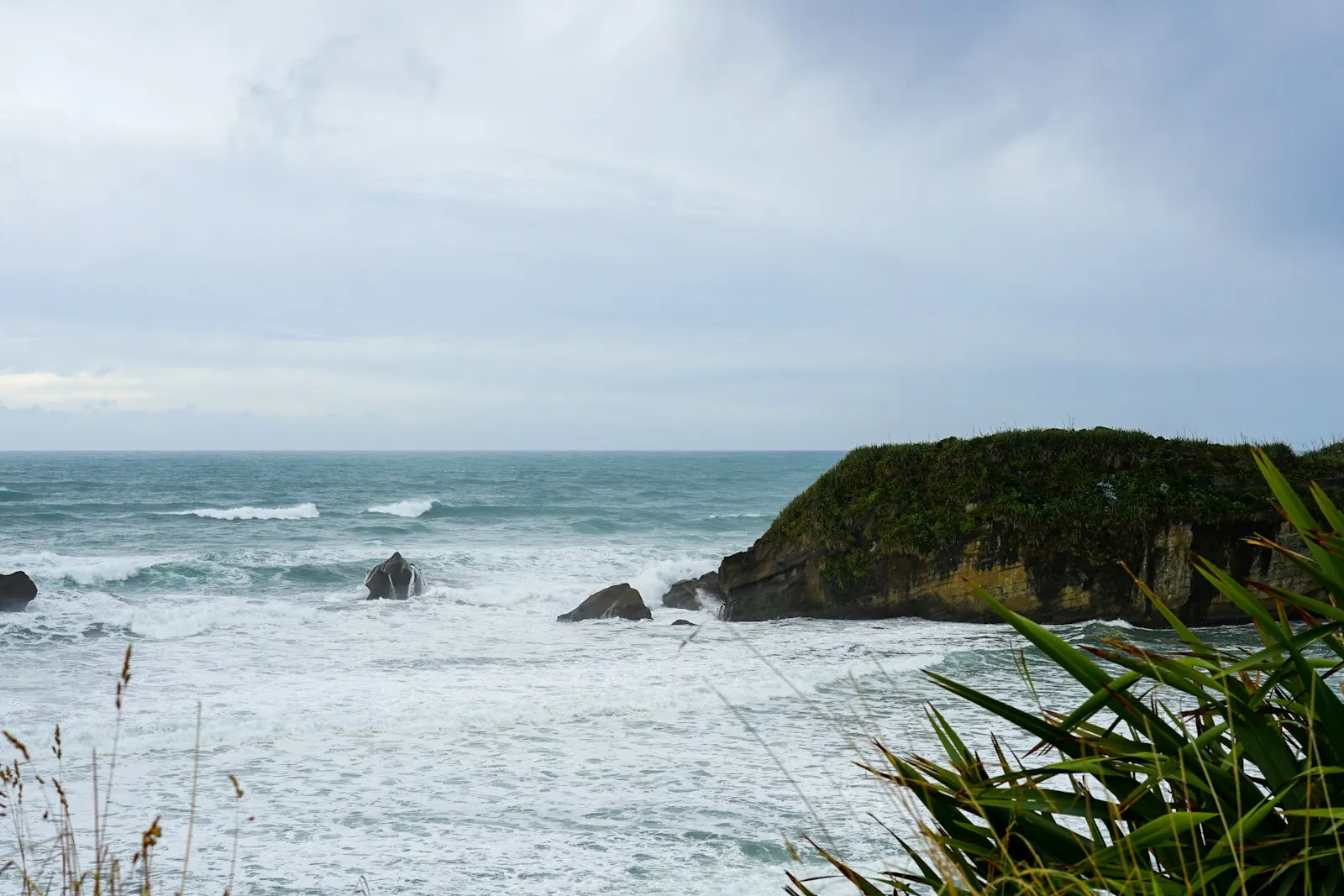
Where to Look for Ambergris on New Zealand's Coast
New Zealand sits in some of the world's richest sperm whale waters. Here's where - and when - ambergris is most likely to wash ashore.
Why New Zealand Produces Ambergris Finds
Sperm whales (the sole biological source of ambergris) are frequent visitors to New Zealand's deep offshore waters, particularly around the Kaikōura Canyon - one of the world's most productive whale habitats. Prevailing westerly and southerly swells carry oceanic material toward New Zealand's long, exposed coastlines, making them natural collection points for deep-sea byproducts including ambergris.
New Zealand's low population density and vast stretches of undeveloped coastline mean many finds go unnoticed. That's an opportunity.
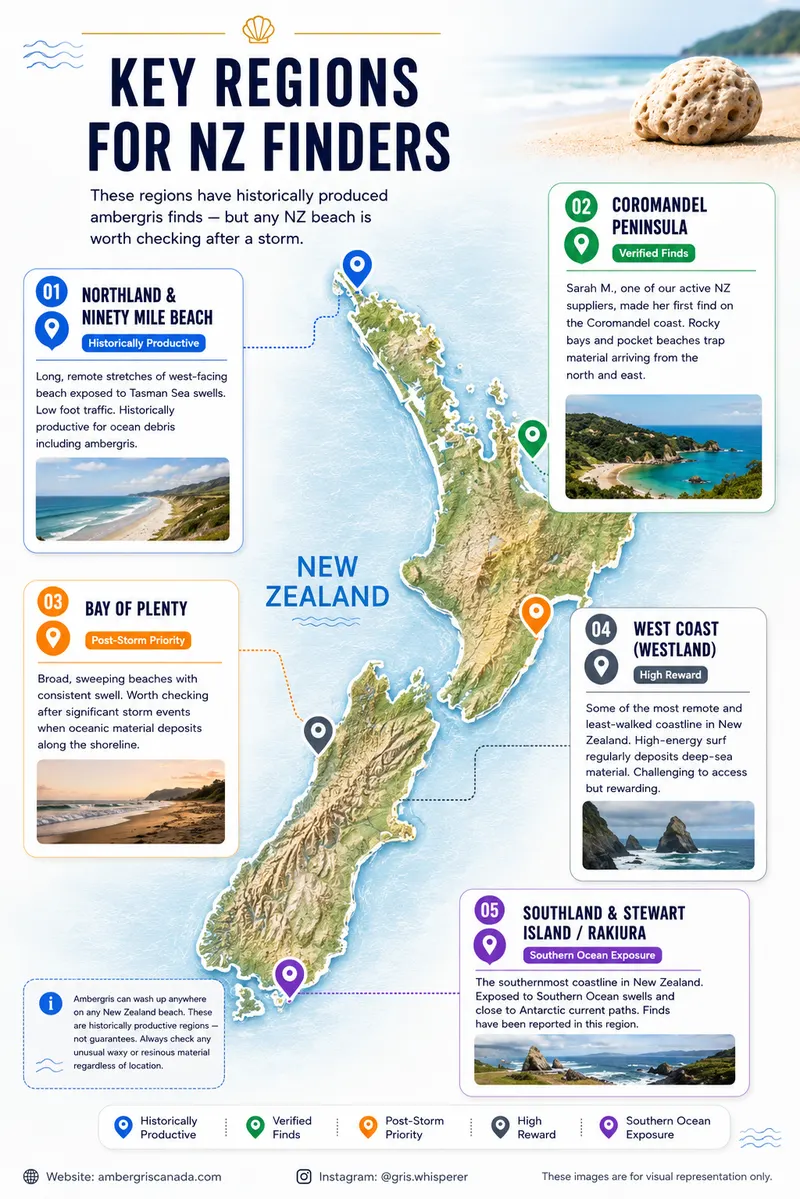
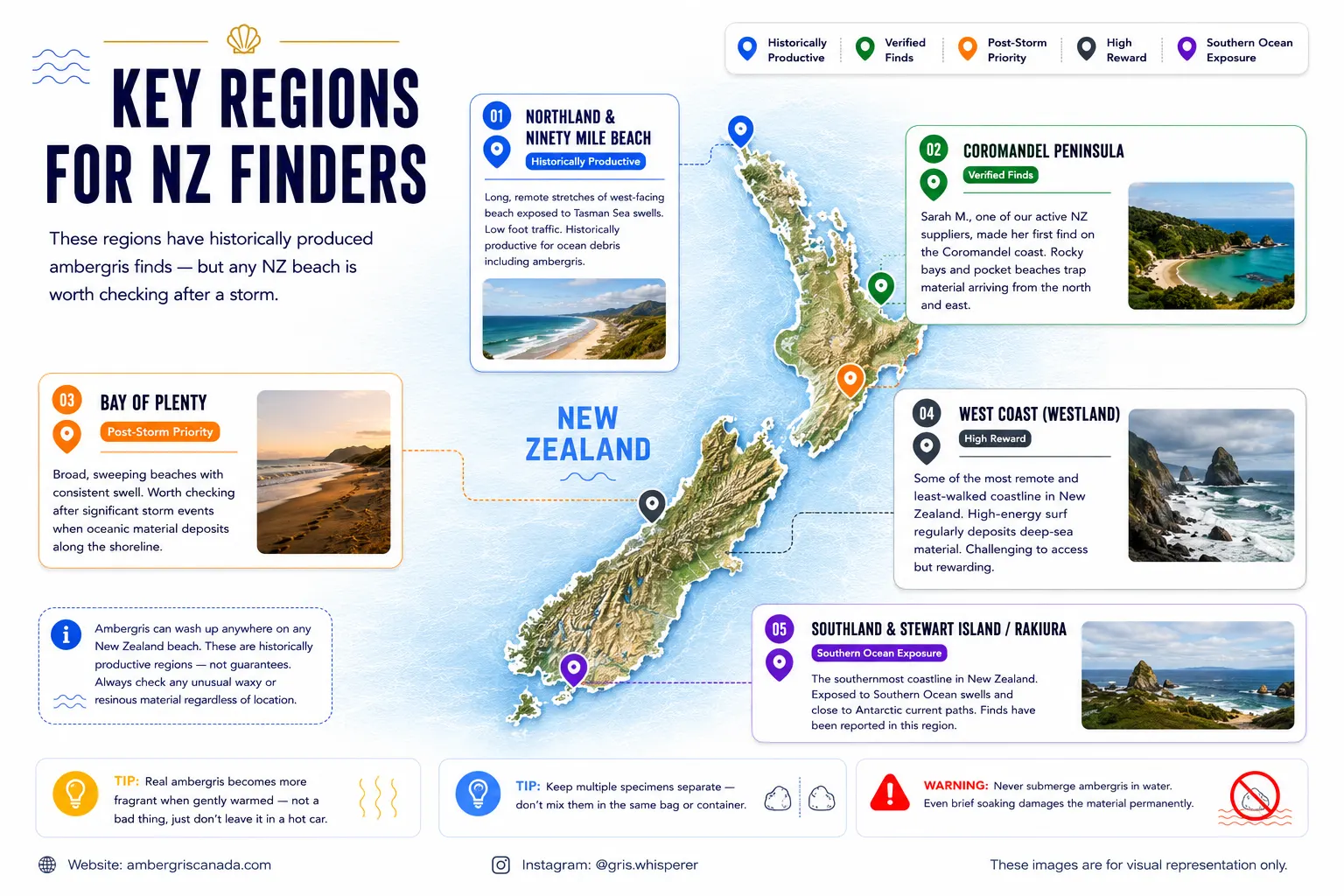
Key Regions for NZ Finders
These regions have historically produced ambergris finds — but any NZ beach is worth checking after a storm.
Ambergris can wash up anywhere on any New Zealand beach. These are historically productive regions — not guarantees. Always check any unusual waxy or resinous material regardless of location.
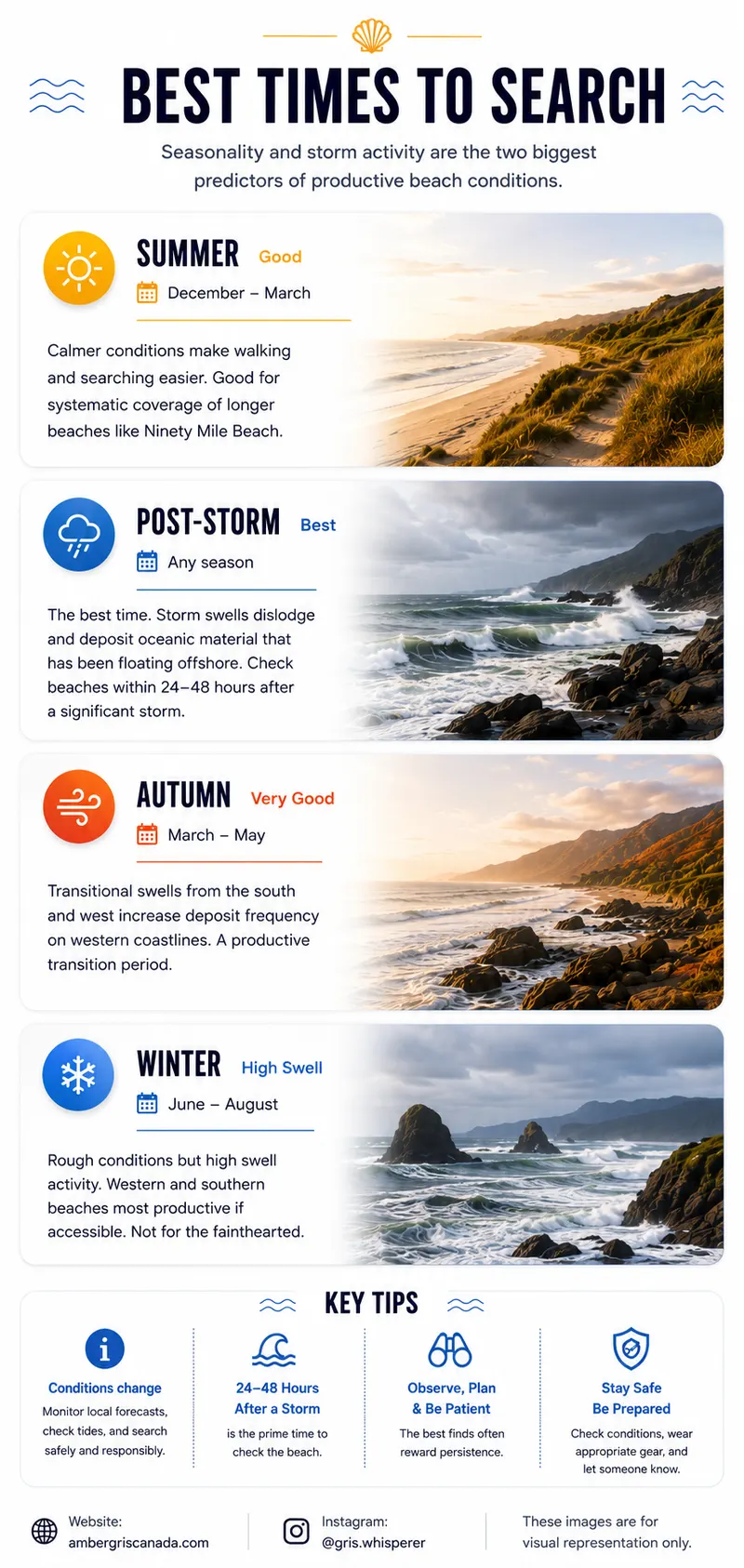
Best Times to Search
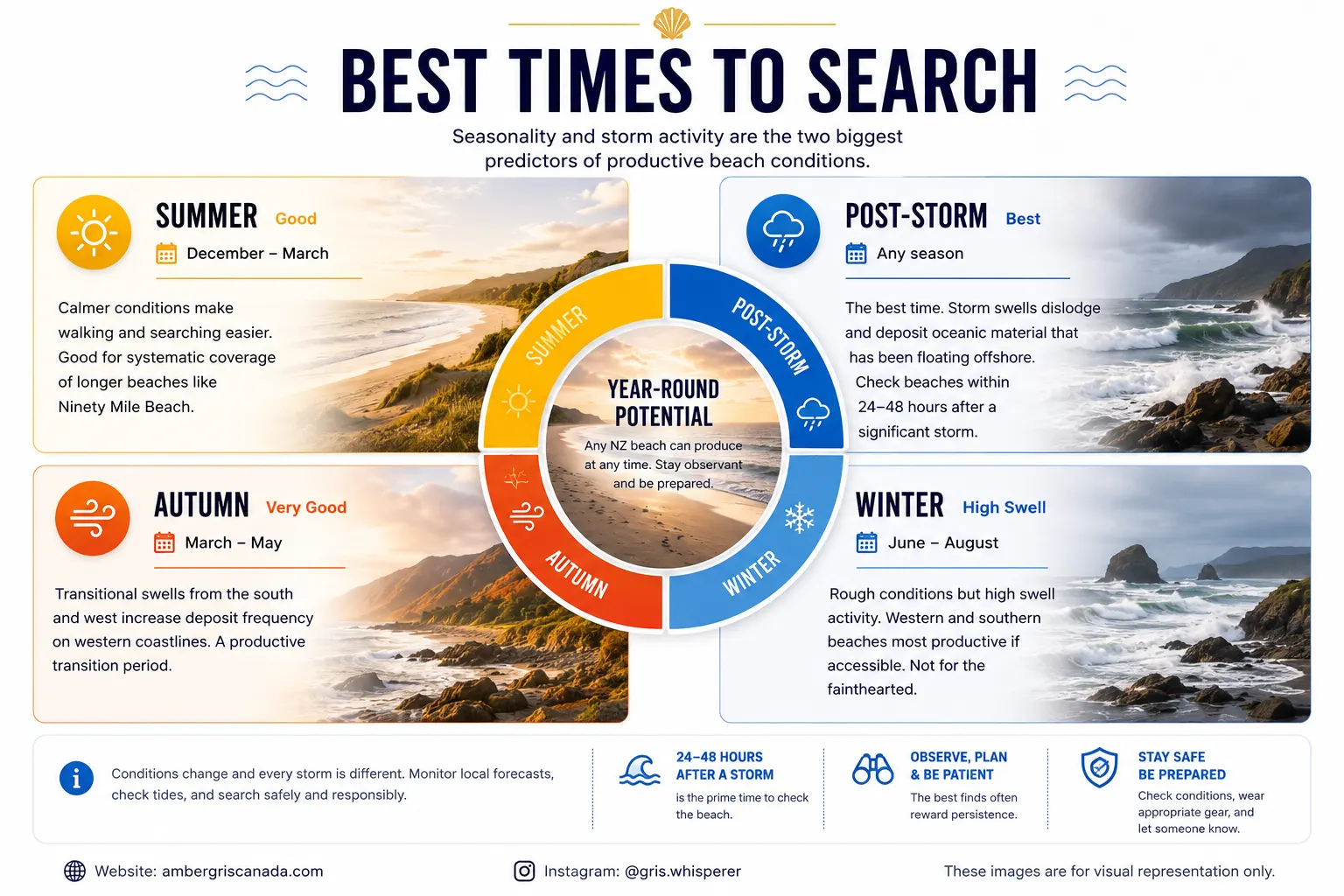
Seasonality and storm activity are the two biggest predictors of productive beach conditions.
Summer
GoodDecember – March
Calmer conditions make walking and searching easier. Good for systematic coverage of longer beaches like Ninety Mile Beach.
Post-Storm
BestAny season
The best time. Storm swells dislodge and deposit oceanic material that has been floating offshore. Check beaches within 24–48 hours after a significant storm.
Autumn
Very GoodMarch – May
Transitional swells from the south and west increase deposit frequency on western coastlines. A productive transition period.
Winter
High SwellJune – August
Rough conditions but high swell activity. Western and southern beaches most productive if accessible. Not for the fainthearted.
What to Look For
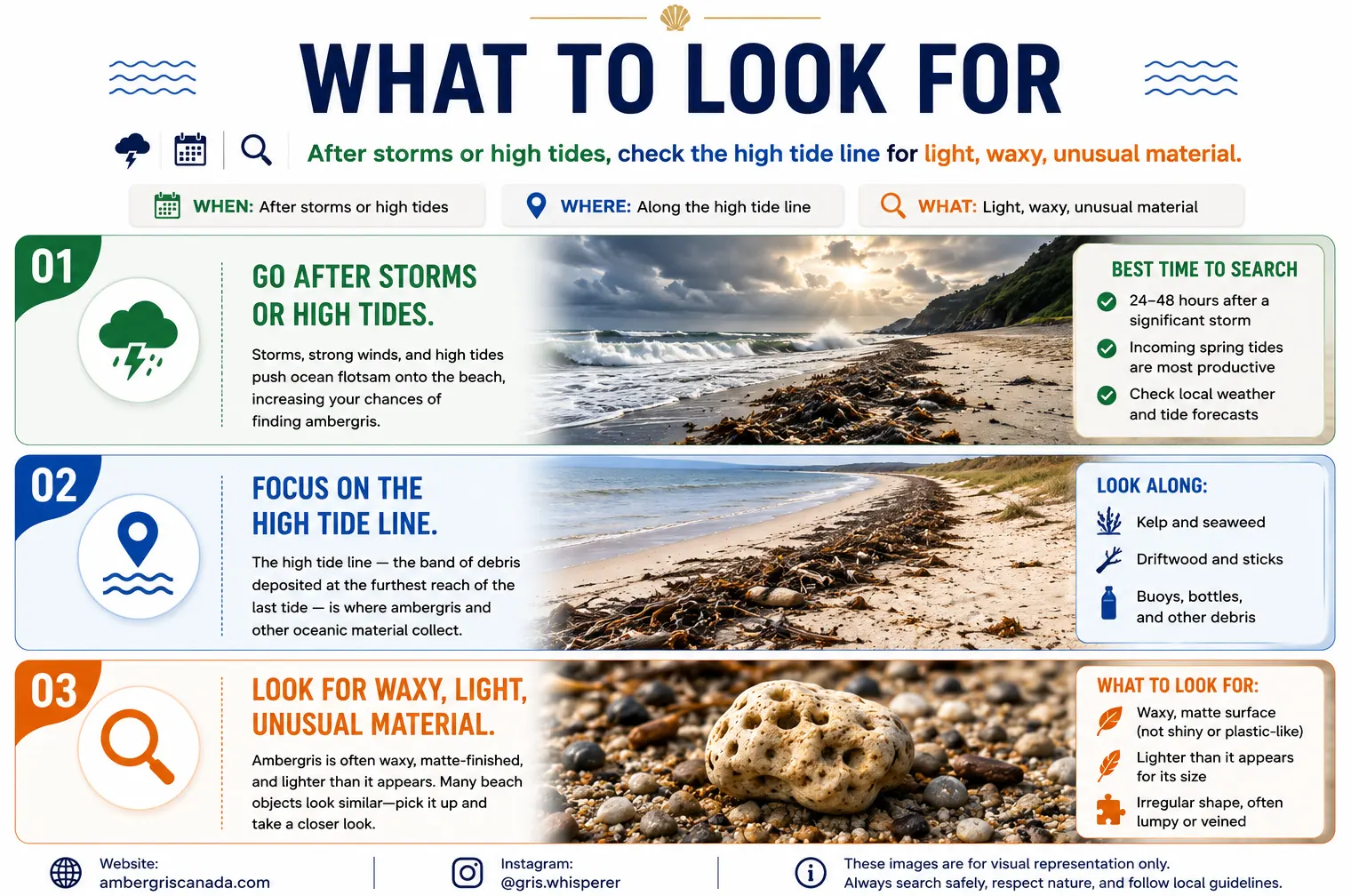
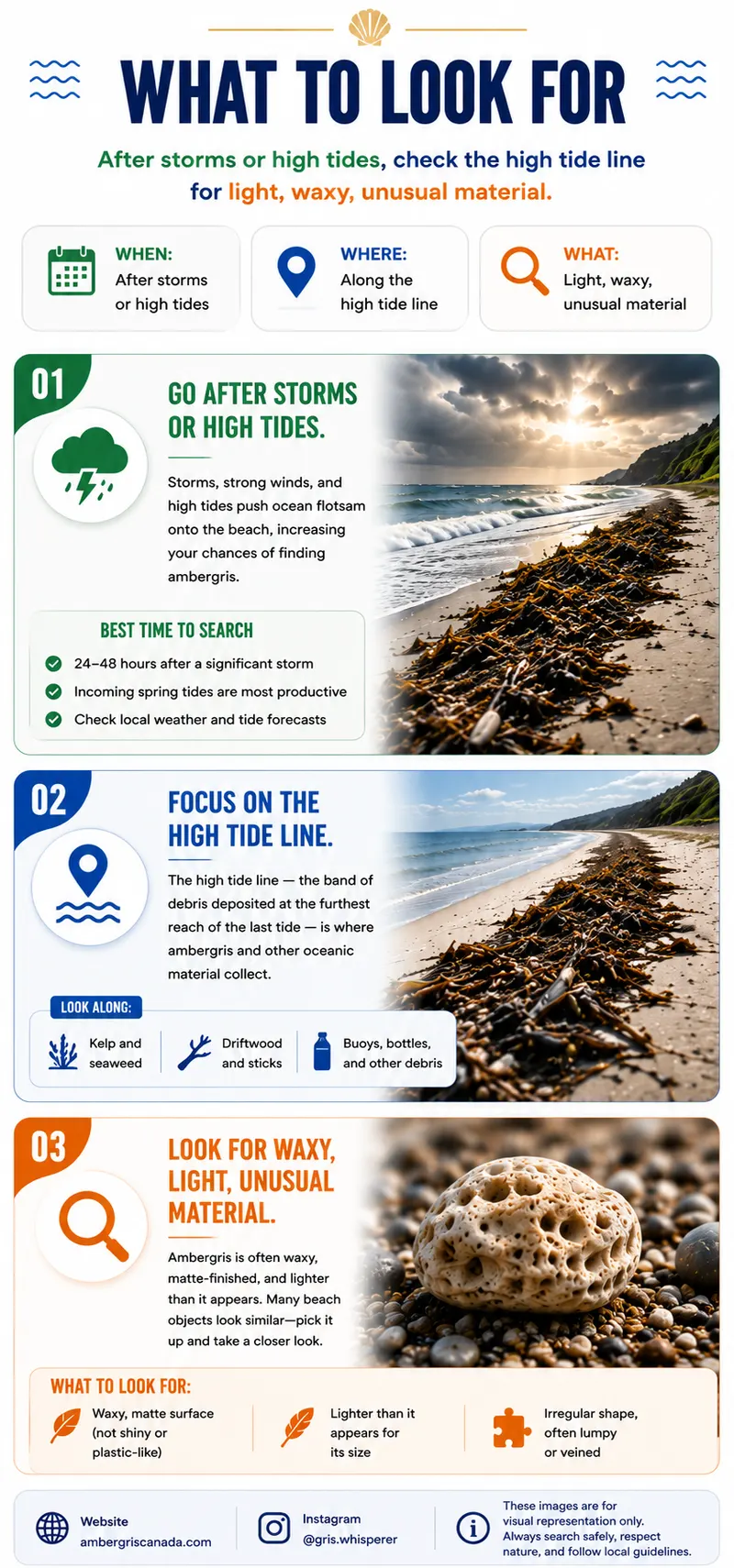
Focus on the high tide line — the band of debris deposited at the furthest reach of the last tide. Ambergris sits here alongside kelp, driftwood, and other oceanic material.
Look for anything waxy, matte-finished, and lighter than it appears. Ambergris is often mistaken for a smoothed rock until you pick it up.
After a storm, move quickly. Popular beaches are covered by other walkers within hours.
Turn This Into a Regular Income.
Some of our New Zealand suppliers walk their local beach twice a week. It doesn't take long before you develop an eye for what doesn't belong there.
See How the Career Programme WorksFound Something Already?
Don't wait. Send us photos and get a free assessment from Nabil within 24 hours.
Get a Free Assessment